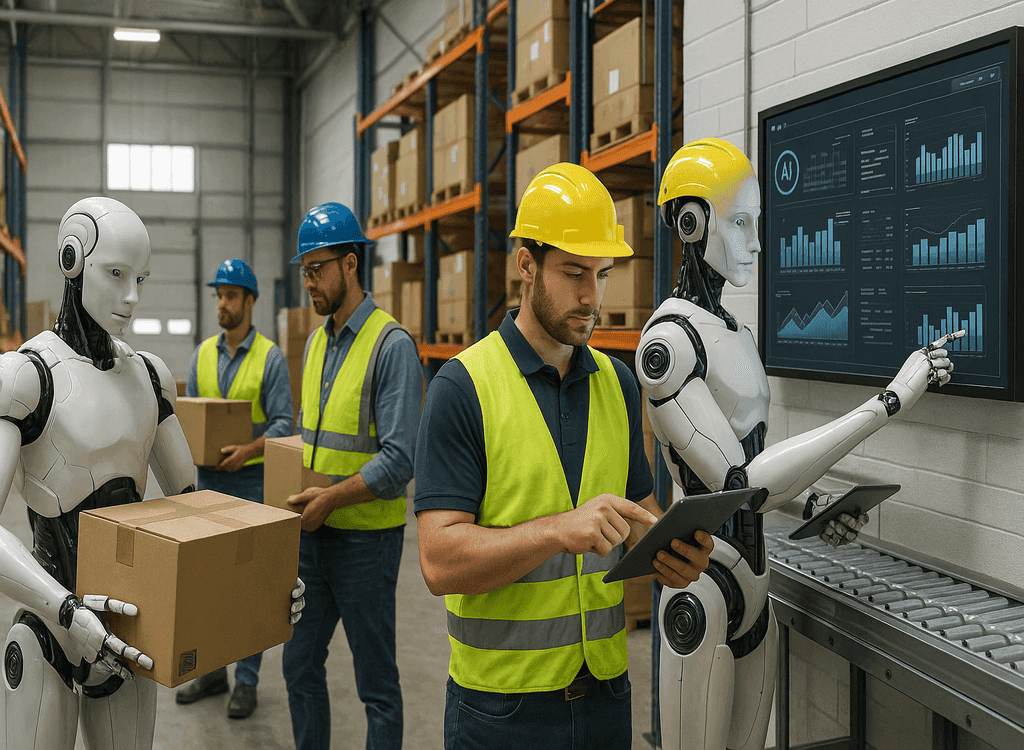
The warehouse workforce is transforming. Forklifts and scanners are out. AI and robotics are in.
The Old Way vs. The New Way
- Old: Drive forklifts, scan barcodes, manual picking
- New: Operate shuttle fleets, monitor AI systems, manage exceptions
Why This Generation Wins
Today's workforce grew up with technology. They're digital natives who can:
- Process multiple data streams simultaneously
- Adapt quickly to new interfaces
- Think strategically about system optimization
ADHD: A Warehouse Superpower
What schools called a liability, warehouses call an asset:
- Hyperfocus on critical tasks
- Pattern recognition for anomalies
- Thrives in high-stimulus environments
- Multitasking across shipping, receiving, picking
Gaming Skills = Job Skills
- Fleet management = RTS games
- Exception handling = puzzle solving
- Dashboard monitoring = HUD awareness
Salary Potential
- Shuttle Operators: $50-65K
- Robotics Technicians: $65-85K
- Automation Supervisors: $85-110K
No college debt. Real careers. The future is now.
The warehousing workforce is undergoing its most significant transformation since the introduction of the forklift. For decades, warehouse jobs meant one thing: physical labor. Driving forklifts up and down aisles. Scanning barcodes on pallets. Manually picking items from shelves. Walking 10-15 miles per shift across concrete floors.
That era is ending. And what's replacing it creates unprecedented opportunities for a new generation of workers—workers whose skills were often undervalued in traditional educational and employment settings.
The Great Warehouse Pivot: From Manual Labor to System Operations
The modern warehouse is becoming a technology hub. 4D shuttle systems autonomously navigate rack structures, retrieving and storing pallets without human intervention inside the rack. AI-powered warehouse management systems optimize inventory placement, predict demand patterns, and coordinate thousands of simultaneous movements. Robotic arms handle picking and packing. Autonomous mobile robots (AMRs) transport goods across facilities.
This shift fundamentally changes what warehouse workers actually do:
The Old Warehouse Job
- Drive forklifts for 8-10 hours
- Manually scan each pallet and item
- Walk picking routes following paper or RF scanner instructions
- Load and unload trucks by hand
- Count inventory manually
- Physical strength and endurance as primary requirements
The New Warehouse Job
- Monitor shuttle fleet performance across multiple dashboards
- Manage exception handling when systems flag anomalies
- Coordinate shipping, receiving, and replenishment workflows simultaneously
- Analyze throughput data and optimize system parameters
- Perform preventive maintenance on robotic systems
- Troubleshoot software and hardware issues in real-time
- Cognitive ability and technical aptitude as primary requirements
This isn't job elimination—it's job evolution. The forklift driver becomes the shuttle fleet supervisor. The picker becomes the exception handler. The warehouse manager becomes a systems orchestrator.
Why Today's Workforce Is Perfectly Suited for This Transition
Here's what traditional hiring managers often miss: the skills required for modern warehouse operations align almost perfectly with the natural abilities of workers who struggled in conventional educational and employment environments.
Consider what modern warehouse technology actually requires:
- Comfort with digital interfaces—operating multiple software systems simultaneously
- Rapid context-switching—moving between shipping issues, receiving bottlenecks, and replenishment priorities
- Pattern recognition—identifying system anomalies before they become problems
- Decision-making under time pressure—resolving exceptions that require immediate human judgment
- Sustained attention in dynamic environments—monitoring systems that change constantly
These aren't the skills that traditional education measures. They're not tested on SATs. They're not developed by sitting quietly in classrooms. But they're exactly what the automated warehouse needs.
ADHD: The Unexpected Warehouse Superpower
This section might surprise you. Attention Deficit Hyperactivity Disorder—the condition that traditional schools and workplaces have treated as a liability—is emerging as a genuine advantage in automated warehouse environments.
Here's why:
Hyperfocus Under Pressure
People with ADHD often struggle with mundane, repetitive tasks. But put them in a high-stimulus environment with genuine urgency? They lock in. When a shuttle fleet throws three simultaneous exceptions and a truck is waiting at the dock, the ADHD operator isn't overwhelmed—they're activated. This is the environment their brain was built for.
Rapid Task Switching
What psychiatrists call “difficulty maintaining focus” is often actually “excellent ability to shift focus quickly.” In a warehouse control room, you're not doing one thing for eight hours. You're switching between shipping manifests, receiving schedules, replenishment queues, shuttle diagnostics, and WMS alerts—sometimes in the same minute. ADHD brains excel here.
Pattern Recognition for Anomaly Detection
ADHD is often associated with noticing things others miss. In a sea of dashboard data, this translates to catching the subtle indicators that something's about to go wrong—before the system formally alerts. This intuitive anomaly detection is incredibly valuable in preventing downtime.
Thriving in High-Stimulus Environments
Traditional warehouse work in quiet, repetitive environments is torture for ADHD workers. Modern control rooms with multiple monitors, real-time data streams, radio communications, and constant activity? That's stimulation that helps ADHD brains stay engaged and productive.
Creative Problem-Solving
When systems don't behave as expected, ADHD workers often see solutions that neurotypical colleagues miss. Their tendency toward non-linear thinking becomes an asset when troubleshooting novel problems.
Gaming Skills Are Job Skills: The Warehouse Connection
If ADHD is an unexpected advantage, gaming experience is a direct qualification. The skills developed through thousands of hours of video games translate almost directly to warehouse automation operations:
Real-Time Strategy (RTS) Games → Fleet Management
Managing a fleet of 50 shuttles across a warehouse isn't that different from commanding units in StarCraft or Age of Empires. Resource allocation, priority management, spatial awareness, and coordinating multiple units toward objectives—these are the same cognitive skills.
First-Person Shooters → Situational Awareness
The ability to monitor a HUD while tracking movement, processing audio cues, and maintaining spatial awareness translates directly to monitoring warehouse dashboards while listening to radio communications and tracking real-time system status.
Puzzle Games → Exception Handling
When a shuttle throws an error code, when inventory counts don't match, when a receiving discrepancy appears—these are puzzles. Workers who spent years solving in-game puzzles approach these challenges with the same systematic problem-solving mindset.
MMOs → Team Coordination
Raid coordination in World of Warcraft requires the same skills as coordinating between shipping, receiving, and inventory teams. Clear communication, role clarity, and adapting to changing conditions in real-time.
Simulation Games → System Thinking
Anyone who's optimized a factory in Satisfactory or managed logistics in Cities: Skylines has developed intuition for throughput optimization, bottleneck identification, and system balancing that applies directly to warehouse operations.
The Multitasking Imperative: Shipping, Receiving, Picking, and Replenishment
Modern warehouses don't operate in silos. A single supervisor might be responsible for:
- Shipping—Ensuring outbound orders are picked, packed, and loaded on time
- Receiving—Processing inbound shipments and directing putaway
- Picking—Coordinating order fulfillment across zones
- Replenishment—Keeping pick locations stocked from reserve storage
- Robotics Control—Monitoring shuttle fleets, AMRs, and automated systems
These functions interact constantly. A receiving delay affects putaway, which affects replenishment, which affects picking, which affects shipping. Workers who can hold multiple simultaneous priorities, track interdependencies, and make decisions that optimize the whole system—not just their immediate task—are extraordinarily valuable.
This is why people with ADHD and gaming backgrounds often excel: they're natural multitaskers who thrive when juggling competing priorities.
The Career Path: From Operator to Automation Manager
The automated warehouse creates a clear career progression that didn't exist in traditional facilities:
- Entry-Level Shuttle Operator: $50,000-65,000—Monitor systems, handle basic exceptions, learn the technology
- Robotics Technician: $65,000-85,000—Maintain and repair automated systems, advanced troubleshooting
- Automation Supervisor: $85,000-110,000—Manage teams, optimize system performance, coordinate across functions
- Automation Manager: $110,000-140,000+—Strategic planning, technology implementation, operational excellence
These are careers that don't require four-year degrees or crushing student debt. They require aptitude, training, and the right cognitive profile—the profile that gaming and ADHD often provide.
What Companies Should Do: Hiring for the Future Workforce
Forward-thinking companies are already adapting their hiring practices:
- Skills-based assessments that test actual job-relevant abilities rather than credentials
- Gaming experience recognized as relevant background in job postings
- Neurodivergent-friendly interview processes and work environments
- Training programs designed for different learning styles
- Performance metrics that measure outcomes rather than conformity
Companies that figure this out first will have a massive competitive advantage in a market facing chronic warehouse labor shortages.
The 4D Shuttle Advantage: Technology That Leverages Human Strengths
Bulldog Rack's 4D shuttle systems are designed with this workforce transition in mind. The operator interfaces are intuitive for digital natives. The exception-handling workflows leverage human judgment where it matters. The monitoring dashboards provide the high-stimulus, information-rich environment where ADHD operators thrive.
This isn't automation that replaces workers—it's automation that transforms what workers do, creating better jobs that leverage uniquely human capabilities.
The Future Is Now: Preparing for the Warehouse Workforce Transformation
The shift from manual to automated warehousing isn't coming—it's here. And it's creating opportunities for workers who were often overlooked by traditional employment pipelines.
If you're a gamer, if you have ADHD, if you've been told your brain doesn't work the “right way”—the modern warehouse might be exactly where your skills are needed.
If you're a company struggling with warehouse labor, consider: the workers you need might not look like the workers you've always hired. The future warehouse workforce is already here. They just need the opportunity to prove what they can do.