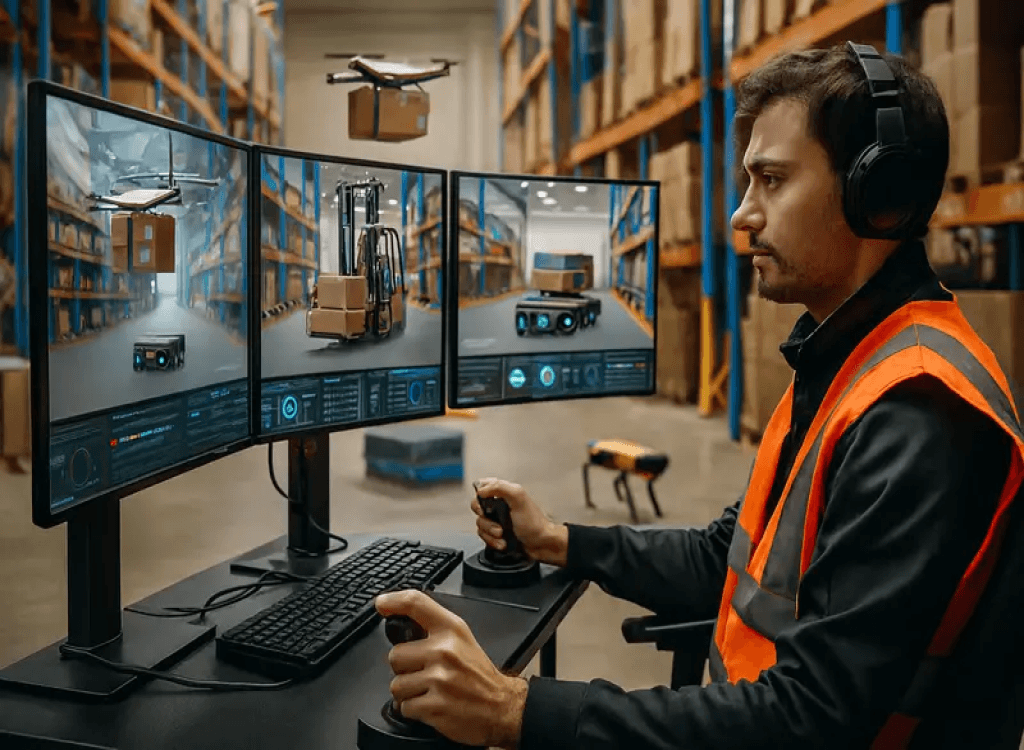
Gaming skills are becoming warehouse superpowers.
Skills That Transfer
- Hand-eye coordination
- Strategic thinking
- Multi-tasking under pressure
- Digital interface fluency
The Opportunity
Warehouse automation jobs pay $50-80K+ with growth potential. No college debt required.
Why It's Not Scary
- Automation creates new roles
- Climate-controlled environments
- Problem-solving, not heavy lifting
- Clear career paths to management
The future belongs to those who can operate the machines.
The warehouse floor is no longer just a grid of racks and forklifts—it's becoming a digital battlefield of efficiency where gaming skills translate directly to operational excellence. And for the next generation of workers, that's actually great news.
The Gaming-Warehouse Connection
As warehouses become increasingly automated, the skills required to operate them are changing dramatically. Gamers—with their quick reflexes, pattern recognition abilities, and comfort with digital interfaces—are emerging as ideal candidates for modern warehouse roles.
Think about it: managing a fleet of autonomous shuttles across a warehouse isn't that different from commanding units in a real-time strategy game. Monitoring multiple system dashboards mirrors the situational awareness required in competitive multiplayer games. Troubleshooting automated equipment requires the same systematic problem-solving approach gamers use to beat difficult levels.
Skills That Transfer
- Hand-eye coordination for operating automated systems and remote-controlled shuttles
- Strategic thinking for optimizing workflows and managing throughput
- Comfort with complex digital interfaces and multi-screen monitoring
- Ability to process multiple information streams simultaneously
- Quick decision-making under time pressure
- Pattern recognition for identifying system anomalies
- Persistence and problem-solving mindset
The Future Isn't Scary—It's Opportunity
There's a narrative that automation will eliminate jobs. The reality is more nuanced—and more optimistic. Automation is eliminating the backbreaking, repetitive tasks that lead to injuries and burnout. In their place, new roles are emerging that are safer, more engaging, and better paid.
Consider the career path of a modern warehouse automation technician:
- Entry-level shuttle operators: $45,000-55,000
- Automation technicians: $55,000-75,000
- Systems supervisors: $70,000-90,000
- Automation managers: $90,000-120,000+
These aren't jobs that require a four-year degree and $100K in student debt. They require aptitude, training, and the kind of digital fluency that comes naturally to anyone who grew up with a controller in their hands.
What Modern Warehouse Jobs Actually Look Like
Forget the image of workers hauling boxes in a sweltering warehouse. Modern automated facilities offer:
- Climate-controlled environments (especially in cold storage, where automation handles the freezer work)
- Ergonomic workstations with multiple monitors
- Problem-solving over physical labor
- Collaborative team environments
- Continuous learning as technology evolves
Companies Are Already Adapting
Forward-thinking companies are actively recruiting gamers and redesigning their interfaces to feel more intuitive. Gamified training programs reduce onboarding time. Real-time performance dashboards with achievement systems increase engagement. The line between work and play is blurring—in a good way.
The 4D Shuttle Advantage
Systems like Bulldog Rack's 4D shuttle are designed with operator experience in mind. The control interfaces are intuitive, the feedback is immediate, and the learning curve is surprisingly short for anyone comfortable with technology. Operators report that managing shuttle fleets feels more like playing a game than doing a job.
A Message to the Next Generation
If you're a gamer wondering what comes next, consider this: the skills you've been building aren't just for entertainment. They're exactly what the modern supply chain needs. The future of warehouse operations isn't about replacing humans with robots—it's about humans and robots working together, with humans doing what they do best: thinking, adapting, and solving problems.
The warehouse industry needs your skills. And it's ready to pay for them.